
Free · no sign-up
Free printable Japanese New Year cards (2027)
Japanese-style greeting cards you can download and print at home: Mt. Fuji, the first sunrise of the year, pine, plum blossoms, cranes and scenes from Japanese folk tales, drawn in the look of ukiyo-e woodblock prints, emaki picture scrolls and sumi-e ink paintings. Every card comes as three PDFs — with an English greeting, blank with no text, and with a Japanese greeting.
- 24 designs
- A4 & US Letter
- English · blank · Japanese
- No sign-up, no email
Free to use: print the cards and send them to family, friends, customers or colleagues. Please do not sell the templates or share the files themselves (link to this page instead).
New Year's cards in Japan
In Japan, many people send New Year's greeting cards called nengajō (年賀状). For cards mailed within Japan, Japan Post starts accepting New Year's cards on December 20, 2026, and asks people to post them by December 27, 2026 so that they are delivered on New Year's Day (January 1). 2027 is the Year of the Sheep (hitsuji, 未) in the Chinese zodiac.
These cards are not limited to the zodiac animal: they show things that are thought to bring good luck at the start of the year, such as Mt. Fuji, the first sunrise (hatsuhinode), pine, bamboo and plum (shō-chiku-bai) and cranes, plus a few well-known Japanese folk tales. The blank version also works as a thank-you or greeting card at any time of year.
The cards
The pictures show the English version. The artwork was made with the image-generation AI Magnific; the greetings are added as text in the PDF, so they print sharply.
-
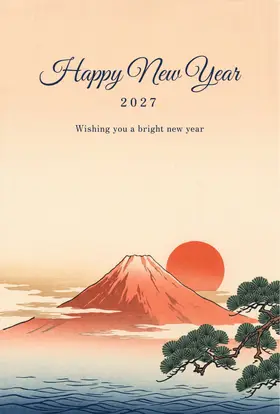
No.122 · Ukiyo-e woodblock style
Red Fuji and the First Sunrise
A ukiyo-e woodblock-style view of Mt. Fuji glowing red at dawn, with the first sun of the year rising beside it and a pine branch in the foreground.
This card on the Japanese page (edit the Japanese text) → -
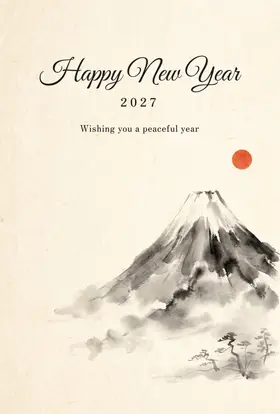
No.123 · Sumi-e ink painting
Ink Fuji and the Vermilion Sun
A quiet sumi-e ink painting of Mt. Fuji in layers of black ink and mist, with a single vermilion sun and wide open space for your own words.
This card on the Japanese page (edit the Japanese text) → -
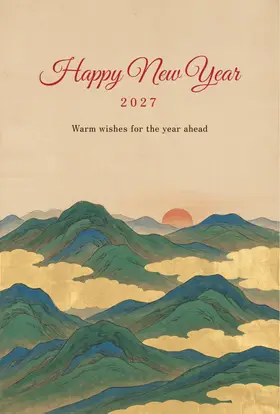
No.124 · Emaki scroll style
Golden Clouds and Mountains at Sunrise
A picture-scroll style landscape of green and blue mountains among gold clouds, with the New Year sun rising over the ridge.
This card on the Japanese page (edit the Japanese text) → -
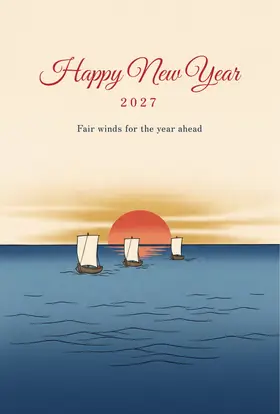
No.125 · Japanese style
Sailboats Toward the Morning Sun
A ukiyo-e woodblock-style seascape: three small sailboats glide over a calm indigo sea toward the red sun rising on the horizon.
This card on the Japanese page (edit the Japanese text) → -
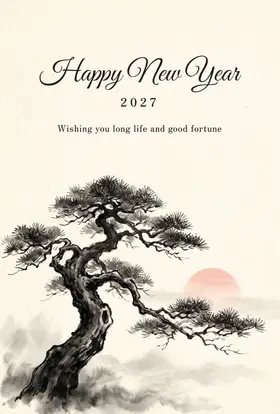
No.126 · Sumi-e ink painting
Ink Pine and the Rising Sun
A sumi-e ink painting of an old, twisting pine wrapped in mist, with a faint vermilion sun behind its branches and plenty of open space.
This card on the Japanese page (edit the Japanese text) → -
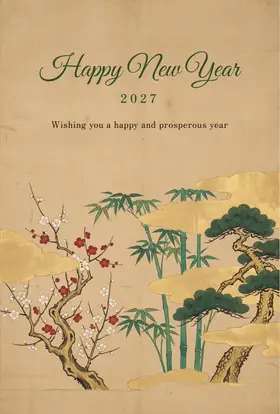
No.127 · Emaki scroll style
Pine, Bamboo and Plum Scroll
A picture-scroll style painting of pine, bamboo and red and white plum blossoms among gold clouds: the three lucky plants of the Japanese New Year.
This card on the Japanese page (edit the Japanese text) → -
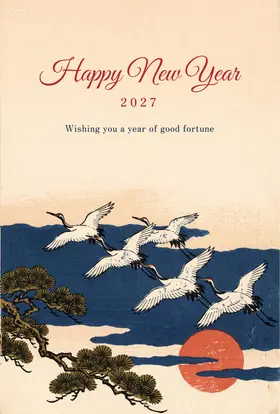
No.128 · Ukiyo-e woodblock style
Cranes Flying Over the Pine
A ukiyo-e woodblock-style print with visible printed texture: a flock of white cranes flies over an indigo cloud band, with a pine branch and the red rising sun.
This card on the Japanese page (edit the Japanese text) → -
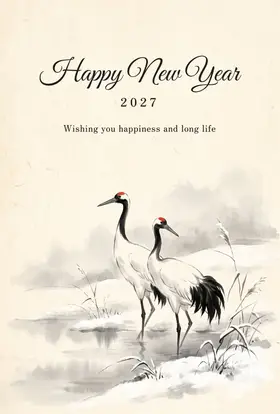
No.129 · Sumi-e ink painting
Two Cranes in Ink
A sumi-e ink painting of two red-crowned cranes standing together by a snowy shore; only their crowns are red.
This card on the Japanese page (edit the Japanese text) → -
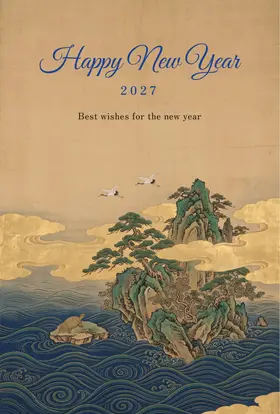
No.130 · Emaki scroll style
Crane and Turtle of Horai Island
A picture-scroll style painting of Horai, a legendary island of long life, with pines, a turtle on a rock and cranes above a deep blue sea among gold clouds.
This card on the Japanese page (edit the Japanese text) → -
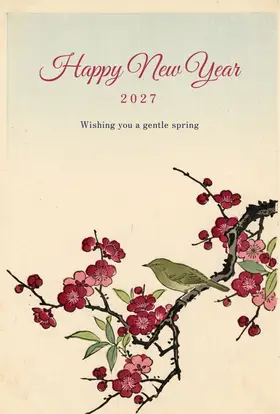
No.131 · Ukiyo-e woodblock style
Plum Blossoms and the Bush Warbler
A ukiyo-e woodblock-style print of red plum blossoms with a small bush warbler perched on the branch, the bird that is said to announce the arrival of spring in Japan.
This card on the Japanese page (edit the Japanese text) → -
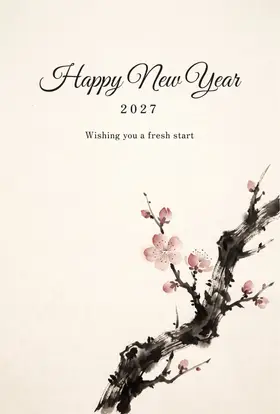
No.132 · Sumi-e ink painting
A Single Plum Branch in Ink
A sumi-e ink painting of one dark plum branch with a few pale pink blossoms, leaving plenty of quiet space for your own words.
This card on the Japanese page (edit the Japanese text) → -
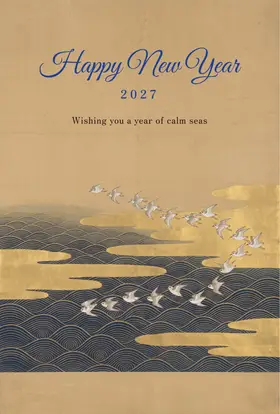
No.133 · Emaki scroll style
Plovers Over the Waves
A picture-scroll style painting of a flock of plovers flying over a sea of patterned waves in indigo and gold, among gold-leaf clouds.
This card on the Japanese page (edit the Japanese text) → -
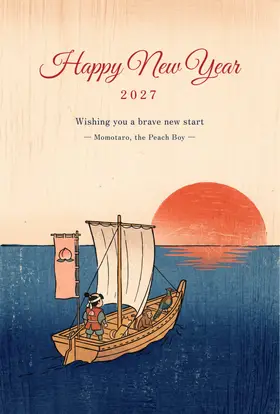
No.134 · Ukiyo-e woodblock style
Momotaro Sets Sail
A ukiyo-e woodblock-style scene from the folktale of Momotaro: the peach boy sails toward the rising sun with a dog, a monkey and a pheasant, under a banner decorated with a single peach.
The story: Momotaro, a boy born from a giant peach, sets out on a sea voyage with a dog, a monkey and a pheasant as his companions.
This card on the Japanese page (edit the Japanese text) → -
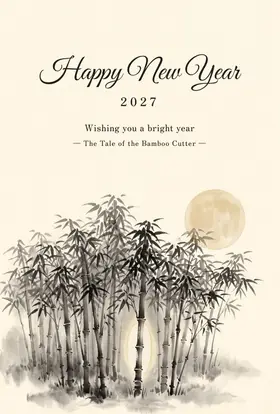
No.135 · Sumi-e ink painting
Bamboo Cutter and the Moon
A sumi-e ink painting of a bamboo grove with one softly glowing stalk and a pale golden full moon, with no figures and plenty of quiet space.
The story: In the tale of the bamboo cutter, an old man finds a tiny girl inside a glowing stalk of bamboo; she grows up to be Princess Kaguya, who is finally called back to the moon.
This card on the Japanese page (edit the Japanese text) → -
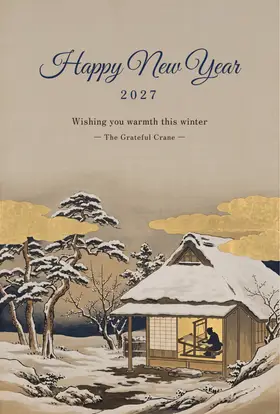
No.136 · Emaki scroll style
The Grateful Crane on a Snowy Night
A picture-scroll style painting of a snowy cottage at dusk: behind the glowing paper screen, only the shadow of a weaver at her loom can be seen, among snowy pines and gold-leaf clouds.
The story: In the folktale of the grateful crane, a kind man rescues an injured crane, and later a mysterious woman weaves beautiful cloth behind a closed door, asking him never to look inside.
This card on the Japanese page (edit the Japanese text) → -
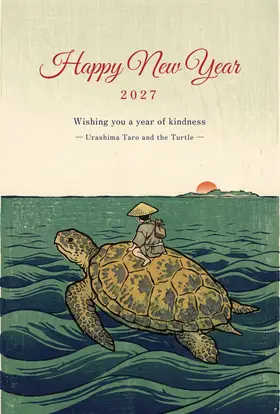
No.137 · Ukiyo-e woodblock style
Urashima Taro Rides the Sea Turtle
A ukiyo-e woodblock-style scene from the folktale of Urashima Taro: a fisherman rides a giant sea turtle across a green sea toward a faraway island at sunrise.
The story: In the folktale of Urashima Taro, a kind fisherman saves a sea turtle, who carries him on its back across the sea to a wonderful palace under the waves.
This card on the Japanese page (edit the Japanese text) → -
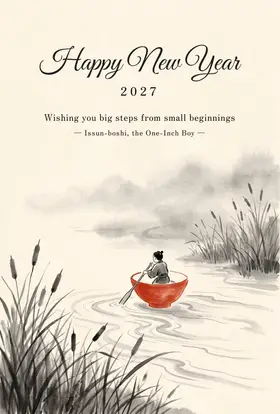
No.138 · Sumi-e ink painting
The One-Inch Boy on the River
A sumi-e ink painting of the one-inch boy paddling a red rice bowl boat with a chopstick oar through reeds on a misty river; only the bowl is colored.
The story: In the folktale of Issun-boshi, a boy no bigger than a finger sets off down the river in a rice bowl, using a chopstick as his oar, to make his way to the capital.
This card on the Japanese page (edit the Japanese text) → -
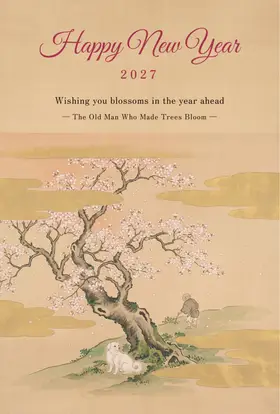
No.139 · Emaki scroll style
Cherry Blossoms for the Kind Old Man
A picture-scroll style painting of a gnarled old tree in full cherry blossom, with a small white dog and, far off, a tiny old man seen from behind, among gold-leaf clouds.
The story: In the folktale of the old man who made trees bloom, a kind old man and his loyal white dog bring good fortune, and withered trees burst into cherry blossoms.
This card on the Japanese page (edit the Japanese text) → -
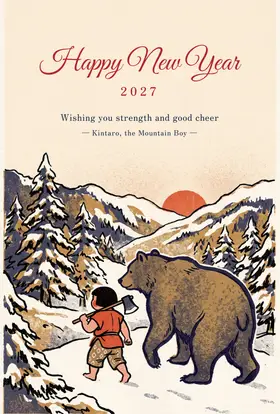
No.140 · Ukiyo-e woodblock style
Kintaro and the Bear
A ukiyo-e woodblock-style scene from the folktale of Kintaro: a strong little boy with an axe over his shoulder walks through snowy mountains beside a friendly bear as the sun rises behind the ridges.
The story: In the folktale of Kintaro, a strong little boy grows up in the mountains, making friends with the animals and wrestling with a bear.
This card on the Japanese page (edit the Japanese text) → -
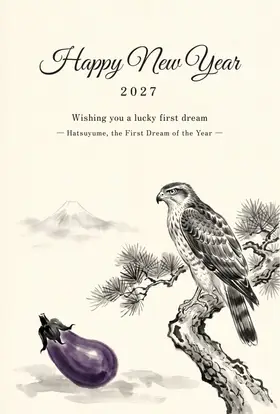
No.141 · Sumi-e ink painting
Hawk and Eggplant: The First Dream
A sumi-e ink painting of a hawk on a pine branch and a single purple eggplant, with a tiny Mt. Fuji far behind: the three lucky sights of the first dream of the year.
The story: In Japan, the first dream of the new year is called Hatsuyume, and dreaming of Mt. Fuji, a hawk and an eggplant is said to bring good luck.
This card on the Japanese page (edit the Japanese text) → -
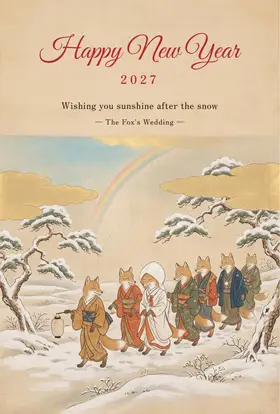
No.142 · Emaki scroll style
Foxes in the Snow: The Fox's Wedding
A picture-scroll style painting of gentle foxes in kimono walking through a snowy field with paper lanterns, under a sunshower and a small rainbow.
The story: In Japan, a sunshower, when rain falls while the sun is shining, is called the fox's wedding, after an old tale of foxes marching in a wedding procession.
This card on the Japanese page (edit the Japanese text) → -
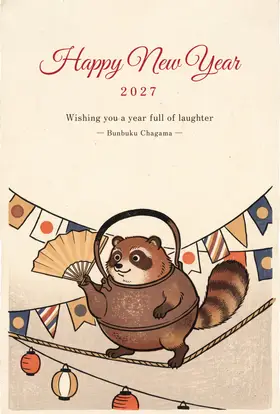
No.143 · Ukiyo-e woodblock style
Bunbuku Chagama, the Tea-Kettle Tanuki
A ukiyo-e woodblock-style scene from the folktale of the tea-kettle tanuki: a playful tanuki with its head, paws and tail out of an iron kettle balances on a rope and waves a fan under festive lanterns and flags.
The story: In the folktale of Bunbuku Chagama, a tanuki who has turned himself into a tea kettle shows off by walking a tightrope.
This card on the Japanese page (edit the Japanese text) → -
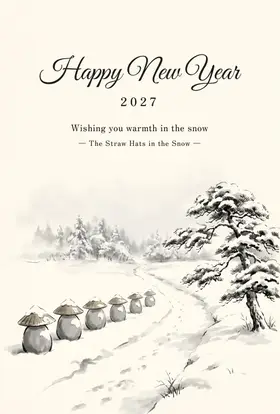
No.144 · Sumi-e ink painting
Straw Hats in the Snow
A sumi-e ink painting of a snowy country path: six round stones wear straw hats along the roadside, with footprints in the snow and a snow-laden pine.
The story: In the winter folktale of Kasa Jizo, a kind old man covers roadside stone figures with his straw hats to keep them from the snow, and is thanked with a gift at the turn of the year.
This card on the Japanese page (edit the Japanese text) → -
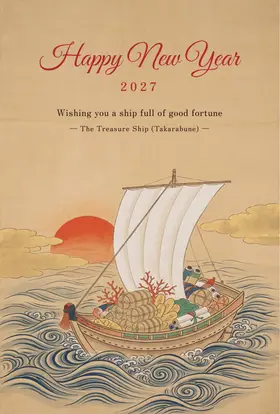
No.145 · Emaki scroll style
The Treasure Ship
A picture-scroll style painting of the lucky treasure ship sailing into the New Year sunrise, piled with rice bales, gold coins, red coral and scrolls.
The story: A treasure ship, or takarabune, is a lucky New Year picture of a ship piled with treasures, traditionally tucked under the pillow to bring a good first dream.
This card on the Japanese page (edit the Japanese text) →
How to print
- 1 Use A4 or US Letter paperThe English and blank PDFs are A4 pages with one card in the middle. They also print on US Letter: at 100% the card keeps its size, and only the empty margins are cut off. Thick matte paper, card stock or matte photo paper looks best; plain paper works too.
- 2 Print at 100% (“Actual size”), in colorIn the print dialog, choose “Actual size” or a scale of 100%. If you print with “Fit to page”, the card simply comes out a little smaller (about 94% on Letter) — the corner marks still show where to cut.
- 3 Cut along the corner marksThe finished card is 100 × 148 mm (about 4 × 6 inches), the size of a Japanese postcard. Cutting about 1 mm inside the marks hides any thin white edge. A paper trimmer or a ruler and craft knife gives straight edges.
- 4 Write your messageWrite on the back of the card, or use the blank version and write on the front. For mailing, put it in an envelope (it fits a C6 envelope, 114 × 162 mm, or a US A6 envelope, 4¾ × 6½ in).
Japanese greeting PDF: this one is a Japanese postcard (100 × 148 mm) page, made for postcards sold in Japan. Choose postcard paper and “borderless” printing if your printer supports it. The Japanese page also lets you edit the Japanese message before saving: 2027年の年賀状テンプレート(日本語).
Terms of use
- The cards are free. There is no sign-up and no email address to enter — the PDF downloads right away.
- You may print the cards freely and send them as greeting cards, for personal, family or business use.
- Please do not sell or redistribute the templates themselves, and do not hand them out as your own work.
- The artwork was made with the image-generation AI Magnific. The greetings and the English text are added by Touch Typing Lab (タッチタイピング研究所).
Japan Post dates: 日本郵便